

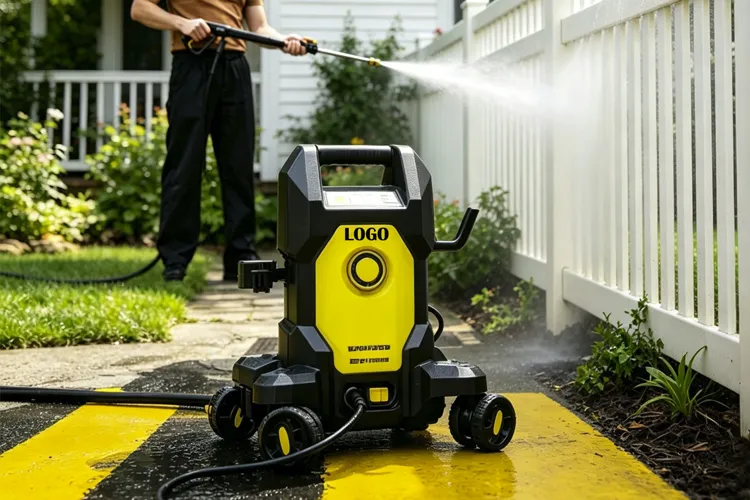
3000 psi high-pressure washer can easily handle any household cleaning scenario, but adjustments need to be made according to different cleaning objects. For example, when cleaning cars, wooden walls and fences, a 40-degree fan nozzle should be used and the distance from the object to be cleaned should be 30-40 cm. This will achieve the cleaning effect while protecting the object from damage due to high impact.
What Level is a 3000 PSI Electric High Pressure Washer?
Let’s look at some basic parameters first. psi is a unit of pressure; the higher the number, the stronger the impact force of the water jet. 3000 psi is equivalent to generating 3000 pounds of force per square inch. Using it to wash oil stains on concrete, old mortar in paving stone grout, or peeling paint on fences is basically a “one-shot deal” level. Moreover, a key indicator for electric pressure washers is flow rate (GPM), which is how many gallons of water can be sprayed per minute. Reliable 3000 psi models on the market typically have a flow rate of around 2.0 to 2.5 GPM—pressure plus flow rate equals true cleaning efficiency.
The overall cleaning power is often measured by Cleaning Units (CU): CU = PSI × GPM
Compared to gas engines, the advantages of electric motors are obvious: you don’t need to buy gasoline, change spark plugs, or endure the roaring noise and exhaust fumes. Plug in the power, connect the hose, pull the trigger, and you’re ready to work.
How to Choose the Best 3000 PSI Electric Pressure Washer
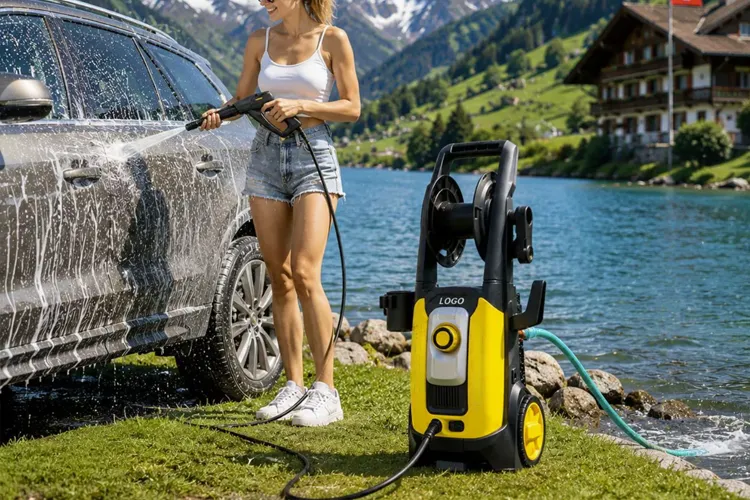
When comparing different models, PSI (Power Sinking Inlet) isn’t the only factor to consider. A high-quality motor is crucial for the equipment’s lifespan. Motor Type: Electric pressure washers on the market primarily use two types of motors: induction motors and series-wound motors. Induction motors have a long lifespan, low noise, and don’t overheat easily during continuous use, but they are larger and more expensive, commonly found in mid-to-high-end home or semi-commercial models. Series-wound motors have high speed, are smaller, and cheaper, but are slightly noisier, requiring breaks after prolonged use. If you use it infrequently each week, and each session doesn’t exceed 30 minutes, a series-wound motor is perfectly adequate. If you want to wash a large yard continuously for two hours, consider an induction motor or a model explicitly labeled “continuous operation.”
We recommend focusing on the following features:
· Longer high-pressure hose
· Quick-connect nozzle
· Automatic start/stop system (TSS)
· Hose reel design
· Four-wheel movement design
· Leakage protection plug
These features significantly improve the user experience and cleaning efficiency.
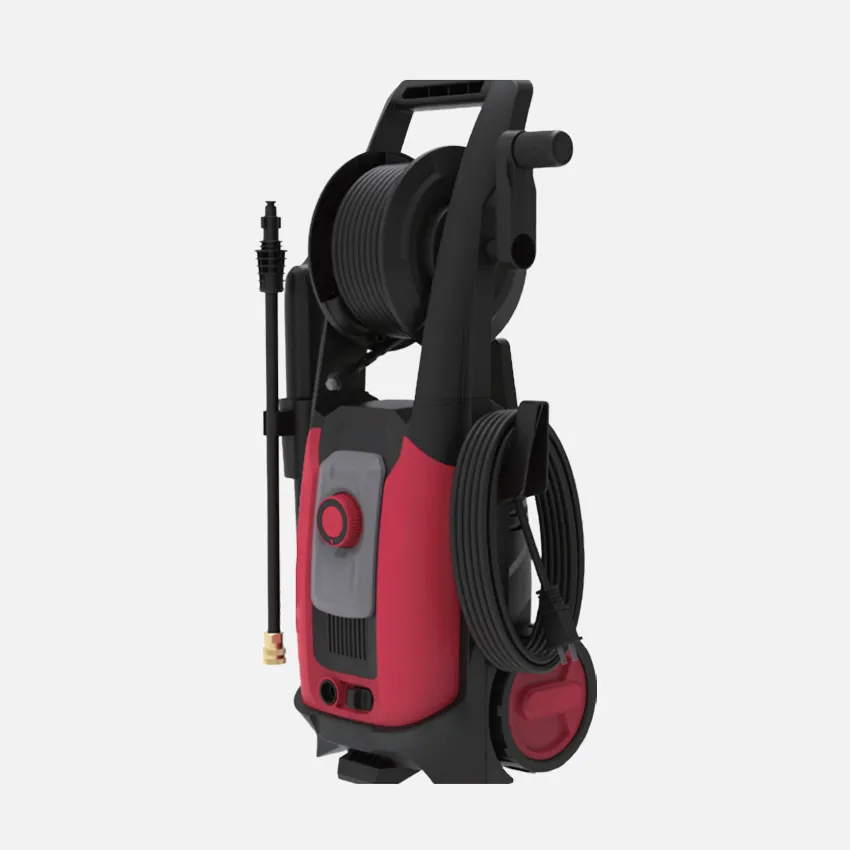
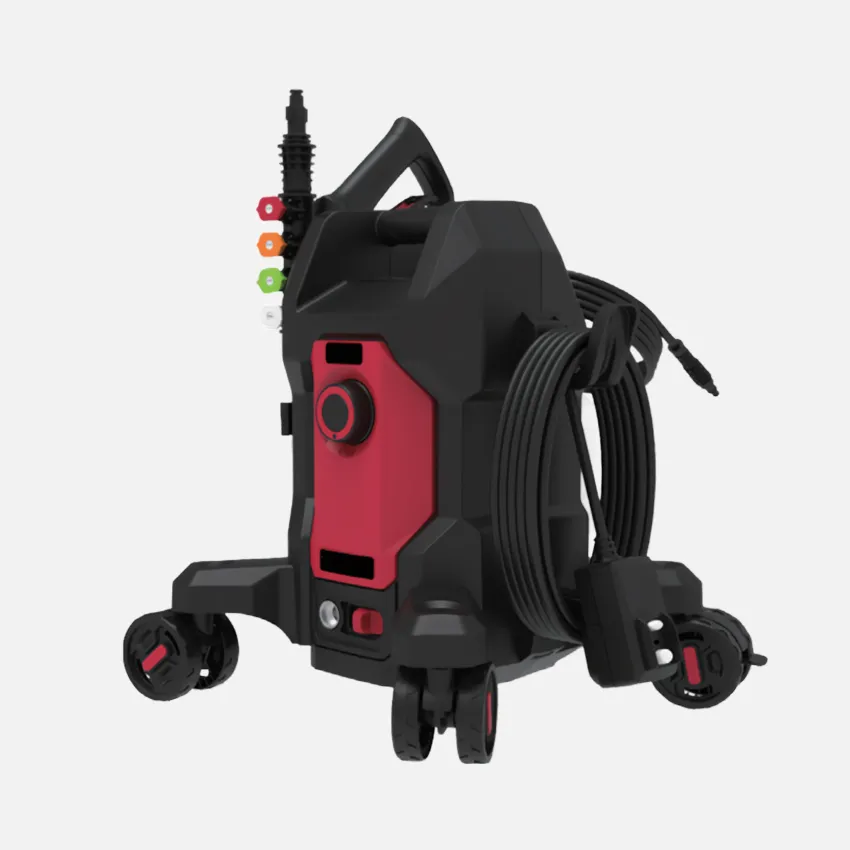
Both the KMS-H03 and KMS-H04 high-pressure washers are 3000 PSI electric high-pressure washers, and you can choose the one that best suits your needs.
What Can a Pressure Washer Do?
1. Car Washing
This is the most common use case. 3000 psi is more than enough for washing sedans, SUVs, and even pickup trucks. You can use a 40-degree fan nozzle to wet the entire car first, then switch to a foam can and spray an avalanche of foam. Wait a few minutes to dissolve the dirt, then use a 25-degree or 40-degree nozzle to rinse clean from bottom to top. Be sure to maintain a distance of at least 30 cm and avoid spraying directly onto the window seals, headlight edges, or areas with damaged paint. Many commercial car washes use machines with around 2500-3000 psi, so this is perfectly adequate for home use.
2. Concrete Driveways, Patios, and Fences
These hard surfaces are where 3000 psi truly shines. Common stains include: black oil stains from car oil leaks, rampant moss and lichen during the rainy season, white residue from de-icing agents in winter, and even accidentally spilled paint. Using a 0-degree or 15-degree nozzle (for the most concentrated pressure), the rinsing efficiency is ten times faster than a regular water gun. A 30-square-meter driveway, which used to require two hours of scrubbing on my knees with a brush, can now be cleaned in ten minutes – a huge difference.
3. Patio Equipment and Outdoor Furniture
The rotten grass stuck under the lawnmower chassis, the burnt grease on the barbecue grill, the years of accumulated dust in the crevices of plastic or rattan chairs – these things are a nightmare to wipe with a cloth, but a high-pressure water gun cleans them off. Especially barbecue grills; many people only use a wire brush to clean the grill, but the inside of the grill and the drip tray are where dirt and grime truly accumulate. Using a 40-degree nozzle with a specialized cleaner, it can be restored to 80% newness in minutes.
4. Exterior Walls, Drains, and Fences
Note: Not all exterior walls can be washed with 3000 psi. Cement fiberboard, brick walls, and stone-painted walls are generally fine, but wooden wall panels (especially those that are aged or have peeling paint) and soft siding (such as vinyl siding) require extra care. The correct approach is to switch to a 40-degree wide-angle nozzle and slowly approach from a distance (about 1 meter), stopping immediately if any signs of damage to the paint or surface are detected. Silt and moss on the inner walls of the drain can be rinsed directly.
Comparison of 3000 PSI, 2000 PSI, 2500 PSI, and 4000 PSI Pressure Washers
Choosing the appropriate pressure level is one of the most important decisions when buying a pressure washer. Many buyers believe that the higher the PSI, the better, but this is not always the case.
2000 PSI is more suitable for light, everyday household cleaning. For example, washing bicycles, outdoor furniture, small cars, or glass windows. Its pressure is gentle, effectively removing loose dust and ordinary mud spots without damaging paint or fragile glass. If you mainly do this kind of light work, 2000 PSI is sufficient.
2500 PSI is a significant performance leap. It can easily handle larger vehicles (SUVs, pickup trucks), wooden or PVC fences, patio floors, and moderately soiled concrete driveways. Compared to 2000 PSI, it cleans stubborn stains faster and with less effort, but it is still within the manageable range for home use.
3000 PSI is often considered the “golden balance” for home users. It has enough pressure to remove stubborn dirt from concrete surfaces, brick walls, facades, and vehicles, such as long-standing moss, grease, or dried mud; yet it’s not as difficult to handle as industrial-grade machines. For most families with yards, driveways, or those requiring regular deep cleaning, 3000 PSI is the least likely to regret their choice.
4000 PSI, on the other hand, is primarily for commercial or industrial use. It easily removes heavy oil stains, industrial grime from machinery, and deeply embedded stubborn stains. However, the trade-off is that improper use (such as too close, incorrect angle, or application to soft surfaces) can easily cause irreversible damage to wood, paint, sealant, and even cement surfaces. Unless you frequently need to clean heavy machinery, large construction vehicles, or commercial warehouse floors, the average household doesn’t need a 4000 PSI.
| Pressure Level | Best For | Suitable Users |
| 2000 PSI | Cars, Bikes, Furniture | Homeowners |
| 2500 PSI | Decks, Fences, Patios | Homeowners |
| 3000 PSI | Driveways, Vehicles, House Washing | Most Users |
| 4000 PSI | Commercial Cleaning | Professionals |
In summary: Choose according to your needs, not necessarily the higher the better. Light daily cleaning → 2000 PSI; fences, patios, large vehicles → 2500 PSI; deep cleaning for home use in one step → 3000 PSI; professional commercial use → 4000 PSI.
Frequently Asked Questions
Q: Is 3000 PSI too high for cars?
A: No. As long as you use a 25° or 40° nozzle and maintain a safe spray distance, 3000 PSI is perfectly safe for cleaning most vehicles.
Q: Can 3000 PSI clean concrete?
A: Yes. It is one of the most effective pressure levels for cleaning concrete driveways and sidewalks.
Q: Is 3000 PSI suitable for cleaning house exteriors?
A: Absolutely. It has sufficient cleaning power for exterior cladding, brick walls, and other exterior surfaces.
Q: Can it remove mold and moss?
A: Yes. When used with appropriate cleaning agents, it can effectively remove mold and moss.
The 3000 psi electric pressure washer is a highly efficient and practical cleaning machine. When used correctly and with caution, it will be one of the most frequently used appliances in your tool shed. Finally, a reminder: no matter how powerful the machine, safety always comes first. Wear safety goggles, check the power cord, don’t spray people, and drain the water after each use. This machine can then safely accompany you for many years.