

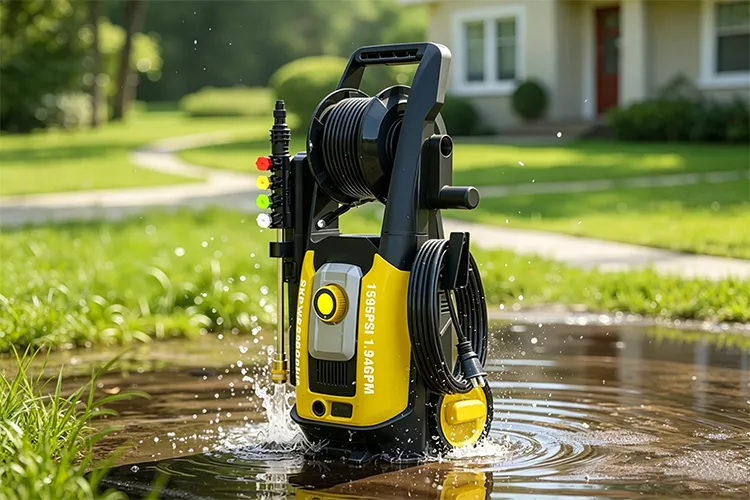
Have you ever had this experience: when you want to buy a pressure washer, you open the product page and are bombarded with unfamiliar terms like PSI, GPM, Bar, electric, gasoline, nozzle angle… making it even more confusing to choose?
Don’t worry. We’ll help you understand the core parameters of pressure washers in the simplest way, find the most suitable model for your usage scenario, and avoid the most common pitfalls when buying one.
After reading this article, you will be able to make a purchase decision in 5 minutes without wasting a single penny.
First, Understand Two Core Parameters: Pressure and Flow Rate
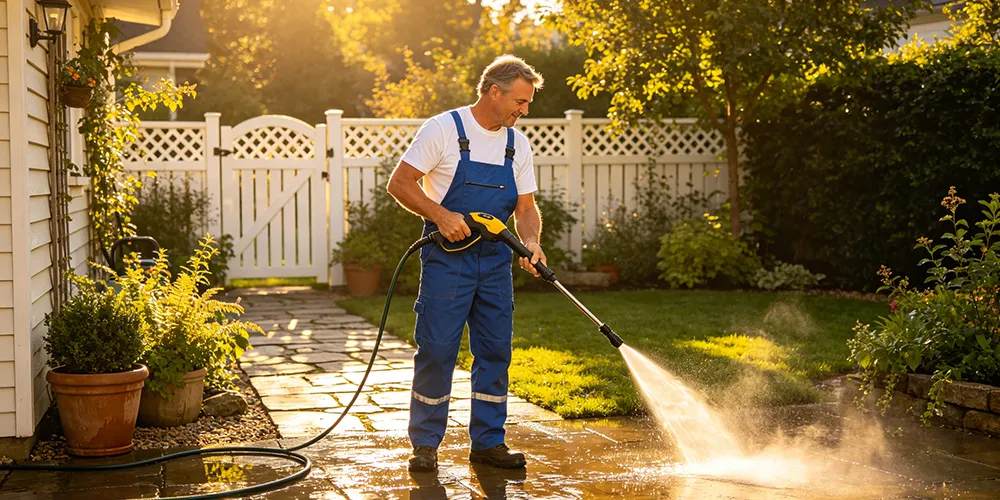
The biggest misconception when buying a washing machine is focusing solely on pressure (PSI). However, the true determinant of cleaning efficiency is pressure multiplied by flow rate.
1. Pressure (PSI / Bar) – Determines “Whether it Can Remove Dirt”
1300–1800 PSI: Suitable for car washing, rinsing balconies, and cleaning furniture.
1800–2200 PSI: Suitable for rinsing yards, fences, paving stones, and light moss.
2200–3000+ PSI: Suitable for peeling old paint, cleaning heavy oil stains, and farm equipment.
Excessive pressure can damage wooden surfaces, car paint, and even penetrate cement grout lines. Sufficient pressure is key; more isn’t always better.
2. Flow Rate (GPM / L/min) – Determines “How Fast it Washes”
A higher flow rate means more water is used per unit time, resulting in a larger cleaning area.
Home-use models typically have a flow rate between 1.2–2.0 GPM. Choose a flow rate of 1.5 GPM or higher whenever possible, as this provides a better cleaning experience.
The combination of both factors truly determines cleaning power. A simple criterion is: Cleaning Units (CU) = PSI × GPM.
A CU of around 2000–2500 is sufficient for most households.
3. Power source: Electric or Gasoline?
| Type | Advantages: | Disadvantages: | Suitable for: |
| Electric (plug-in) | Low noise, maintenance-free, ready to use immediately | Relies on power outlets, limited mobility | Most household users |
| Gasoline Engine | Powerful motor, no power supply required, suitable for outdoor use | High noise level, requires engine maintenance, complicated starting process | Farms, large-scale farms, and scenarios without power supply |
For washing cars and rinsing yards, an electric pressure washer is perfectly adequate. An electric pressure washer is the recommended first choice.
Choose the Most Suitable Machine Based on The Most Common Scenarios
Based on feedback from 1000+ real users, we’ve compiled three of the most typical home scenarios. Simply refer to these when selecting a model.
| Your Main Tasks | Recommended Pressure | Recommended Traffic | Recommended Model Types | Budget Reference |
| 🚗 Car Washing, Balcony Rinsing, Post-Watering Cleaning | 1300–1800 PSI | 1.2–1.4 GPM | Lightweight Electric | 300–600元 |
| 🏡 Cleaning Yard Floors, Fences, Exterior Walls, and Patios | 1800–2000 PSI | 1.5–1.7 GPM | Medium-weight Electric | 600–1200元 |
| 🚜 Farm Equipment, Large Tractors, and Removing Old Paint | 2500+ PSI | 2.0+ GPM | Gasoline Engine or High-end Electric | 1500–3000元 |
The safety configuration most people would choose: an electric high-pressure washer with approximately 1900 PSI and 1.6 GPM.
These 5 additional features can solve post-use problems
Looking at the specifications alone isn’t enough. The following details directly impact the user experience and are often overlooked by beginners.
1. Complete Nozzle Types
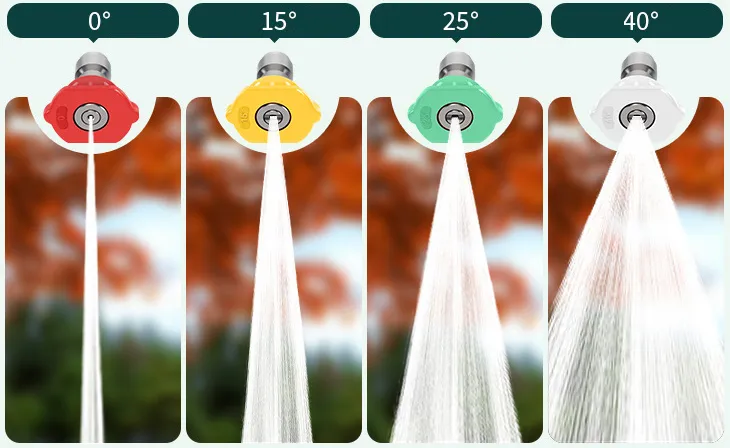
At least 0°, 15°, 25°, 40° nozzles and a foam pot (or detergent nozzle) should be provided.
0° is for stubborn stains, 40° for large areas of wetness, and the foam pot is for car washing.
2. Hose Length
Standard hoses are usually 3–5 meters, but at least 6–8 meters is recommended; otherwise, dragging the machine around will be tiring.
3. Self-priming Water Supply Support
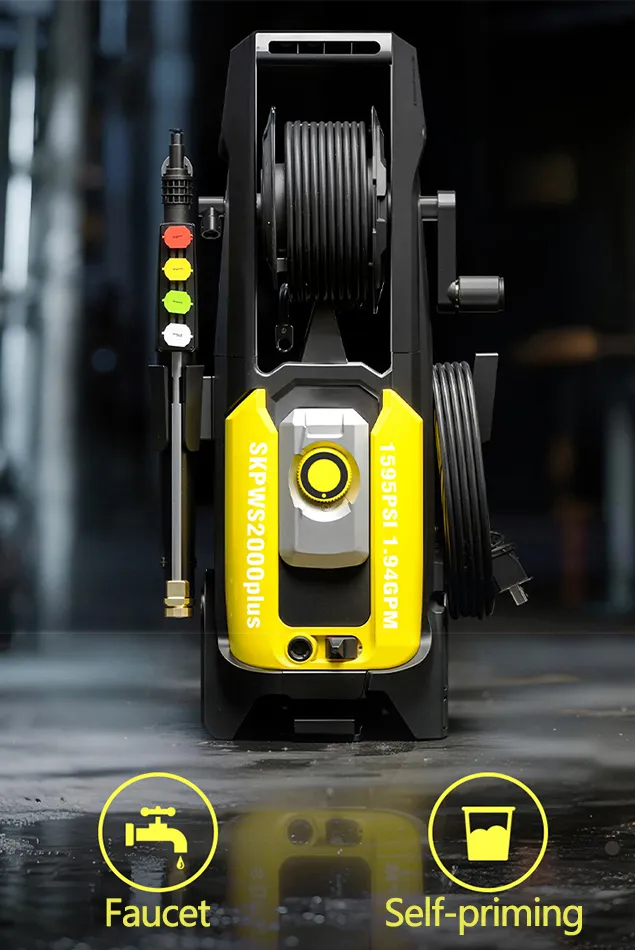
Most models require a tap connection. If you can only use a bucket or sink, choose a model with self-priming functionality.
4. Mobility and Storage Design
Larger wheels make it easier to climb stairs than smaller wheels.
5. Safety Features
Automatic Start/Stop: Automatically shuts off the pump when the trigger is released, saving energy and protecting the machine.
5 Most Common Mistakes (and How to Avoid Them)
Focusing solely on PSI, ignoring the flow rate
→ Result: High pressure but slow flow. Remember: Flow rate and pressure are equally important.
Buying an industrial-grade model for home use
→ Result: Bulky, noisy, difficult to maintain, and may damage tiles or car paint.
Ignoring part compatibility
→ Result: No replacement nozzles, incompatible hose connectors. Prioritize brands with quick-connect fittings (1/4-inch quick-connect).
Ignoring water supply requirements
→ Result: Users with low water pressure buy high-flow models, resulting in frequent start-stop cycles. Check your faucet flow rate before purchasing.
Ignoring warranty and after-sales service
→ Result: Quality issues arise within a year of use, and repair centers are unavailable. Choose brands with at least a 1-year warranty on the entire unit.
Home Pressure Washer Budget
Recommended by Budget Segment
$33.5 – $39.5 (Entry-level)
Suitable for tenants, ≤10 uses per year. Common models have a pressure of 1400–1600 PSI; note that the flow rate is usually around 1.2 GPM, resulting in average cleaning efficiency.
$51.5 – $77.5 (Mainstream Home Use, Recommended)
The most cost-effective range. Pressure 1800–2000 PSI, flow rate 1.5–1.7 GPM, comes with a complete set of nozzles and hoses, meeting the needs of 90% of households.
$300 – $550 (Semi-Professional)
For large yards, frequent use, and heavy dirt. Mostly induction motors or gasoline engines, offering better noise reduction and durability.
Four-Step Machine Selection Method (Quick Decision-Making Process)
Determine the main task: Car washing? Yard washing? Exterior wall washing?
Determine the parameter range: Refer to the comparison table above → e.g., 1800–2000 PSI, 1.5 GPM+
Choose the power type: 99% of beginners choose electric.
Check convenient features: Automatic start/stop, long hose, large wheels, complete nozzles
Lock in the budget: 51.5–77.5 USD range
Frequently Asked Questions (FAQ) for Beginners
❓ Will a pressure washer damage my car paint?
No, as long as you use the correct nozzle (25° or 40°) and maintain a distance of at least 30 cm. Never point a 0° nozzle at the paint.
❓ Can I use a bucket to supply water instead of tap water?
Yes, but the machine must support self-priming. Most entry-level electric models do not have self-priming; please check the instruction manual before purchasing.
❓ How often should I maintain it?
Electric home models: Check the seals and nozzles annually; gasoline engines require oil and spark plug changes. Drain the pump before long-term storage.
❓ Can I use an extension cord?
Yes, but use a 12AWG or thicker outdoor extension cord, no longer than 30 meters, otherwise voltage drop will affect performance.