

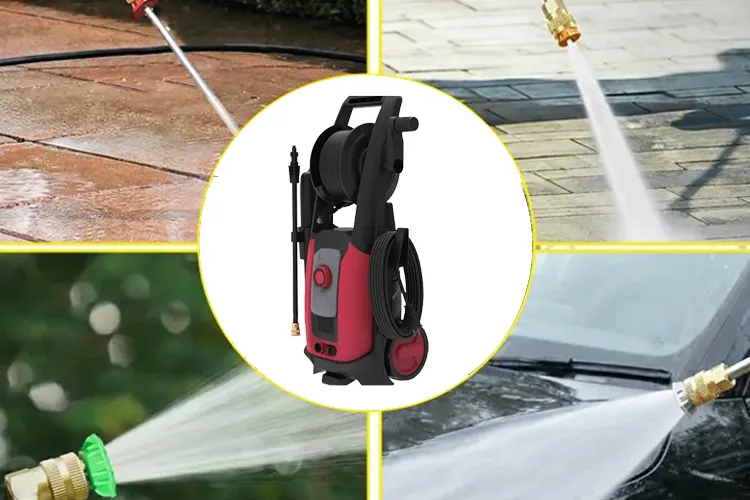
Maintaining a clean home requires time, effort, and the right cleaning tools. Traditional cleaning methods—buckets, brushes, and ordinary hoses—can remove surface dust, but often fall short when dealing with stubborn stains, mud, moss, and outdoor grime.
A home pressure washer uses high-pressure water to quickly and effectively remove dirt from various surfaces. Whether you need to clean your car, driveway, yard, fence, walls, or outdoor furniture, a power pressure washer makes home cleaning simpler and more efficient.
What is a Home Pressure Washer?
A home power washer is a cleaning device that removes dirt and stains by increasing the pressure of ordinary water and using a high-speed jet of water. Unlike ordinary garden hoses that rely primarily on water flow, pressure washers use an electric motor to drive a water pump that generates powerful water pressure. This concentrated high-pressure water jet can easily remove dirt that is difficult to handle with traditional cleaning methods.
A typical electric pressure washer usually includes the following key components:
Electric Motor: The electric motor provides power to the water pump. For home use, electric motor drive is widely popular—it operates with lower noise, is easy to operate, has low maintenance costs, and is compact.
High-Pressure Water Pump: The water pump is the core component of the pressure washer; it converts the ordinary water flow entering the machine into a high-pressure water jet with powerful cleaning capabilities. The performance of the water pump directly affects water pressure stability, cleaning efficiency, and the machine’s lifespan.
Spray Gun and Nozzles: The spray gun controls the water flow output, and the nozzles change the spray pattern. Different nozzles are suitable for different cleaning tasks—wide-angle sprays are suitable for cleaning large areas, concentrated sprays are suitable for stubborn stains, and adjustable sprays can flexibly meet the needs of home cleaning.
High-Pressure Hose and Accessories: The high-pressure hose connects the main unit and the spray gun, determining the cleaning area. Common accessories include extension poles, foam spray bottles, floor cleaning attachments, and various nozzles.
Why Do Families Need Pressure Washers?
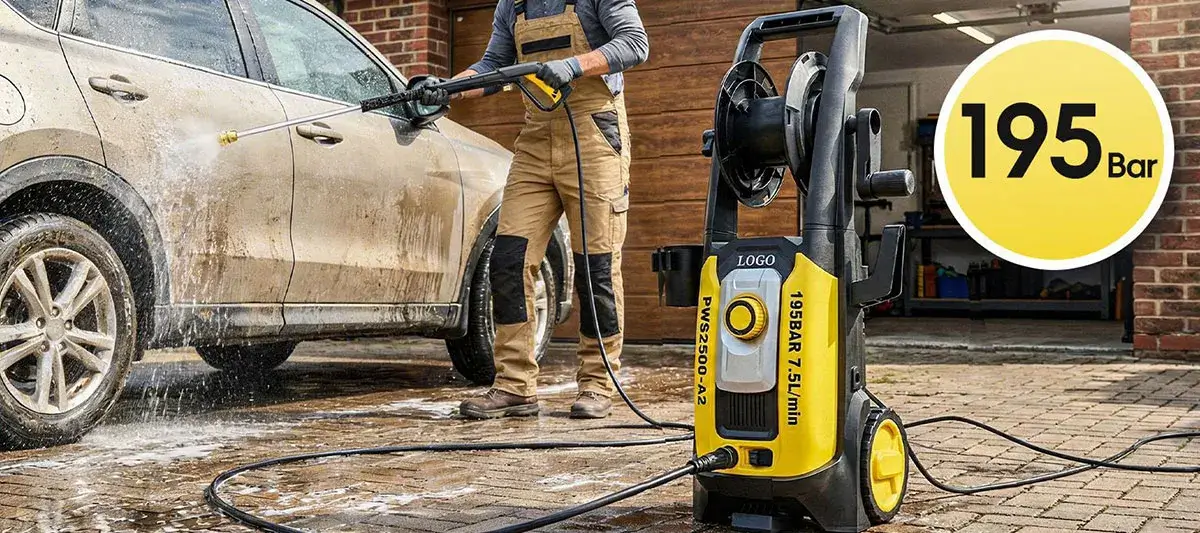
Many families spend hours manually scrubbing outdoor areas. Pressure washers can significantly reduce cleaning time and dramatically improve cleaning results.
Save Time and Effort: High-pressure water jets remove dirt much faster than traditional cleaning methods. For example, manually cleaning a driveway might require sweeping, spraying detergent, multiple scrubbing, and rinsing, while a pressure washer can accomplish the same task in much less time.
Deep Cleaning Capabilities: Outdoor surfaces are constantly exposed to dust, rain, mud, grease, mold, and moss. Home pressure washers effectively remove these contaminants, restoring a clean look to homes and outdoor environments.
Reduce Water Consumption: Many people believe that pressure washing consumes more water. In reality, pressure washers are often more water-efficient—they rely on pressure to enhance cleaning power, rather than simply increasing water volume. The result is stronger cleaning power, shorter cleaning time, and less water waste.
What Areas Can a Home Pressure Washer Clean?
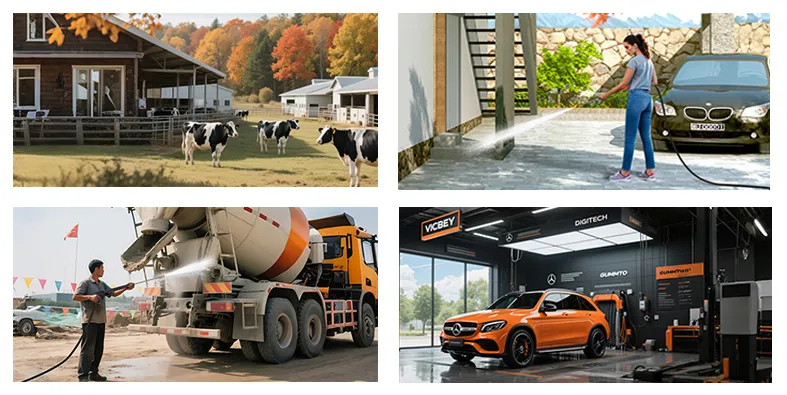
A good home pressure washer is a multi-functional cleaning tool that can meet many household cleaning needs, including vehicles, outdoor areas, walls, fences, furniture, and more.
Cleaning Cars and Vehicles: One of the most common uses of an electric pressure washer is cleaning vehicles, removing road dust, mud, surface grime, and brake dust. However, choosing the right pressure is crucial—using too much pressure can damage the paint or sensitive areas. Lower pressure with a wide spray pattern is generally recommended for car cleaning.
Cleaning Driveways and Patios: Driveways and patios tend to accumulate a lot of grime over time, including oil stains, mud, moss, and weather-related stains. Pressure washers can remove deep-seated grime, restoring concrete and stone surfaces to a clean look.
Cleaning House Exteriors: Pressure washing can help maintain house exteriors, vinyl siding, brick surfaces, and fences. However, it’s essential to choose the appropriate pressure, as excessive pressure can damage some materials.
Cleaning Outdoor Furniture: Outdoor furniture easily accumulates dust, pollen, bird droppings, and weather-related stains. High-pressure washers can make seasonal outdoor cleaning easier.
How Much PSI is Needed for Household Cleaning?
PSI (Pounds per Square Inch) measures water pressure. A higher PSI indicates a stronger water flow, but higher pressure isn’t necessarily better—the correct pressure depends on the specific cleaning purpose.
| Cleaning services | PSI is recommended. |
| Car washing | 1,200–1,900 PSI |
| Outdoor furniture | 1,500–2,000 PSI |
| Wooden cladding | 1,200–1,500 PSI |
| Vinyl cladding | 1,200–2,000 PSI |
| Brick/concrete walls | 2,500–3,000 PSI |
| Pavilion/driveway | 2,500–2,700 PSI |
For most home users, a pressure washer with 1,500–2,500 PSI strikes a good balance between cleaning power and safety.
It’s important to note that PSI is not the only indicator of cleaning power. Water flow rate (GPM) is equally important—a 1,500 PSI / 2.0 GPM washer may be more effective at cleaning than a 2,000 PSI / 1.5 GPM machine, because the higher water flow rate washes away detached dirt more quickly.
Advantages of Electric Pressure Washers:
✔ Quiet Operation – Ideal for Residential Areas
✔ Lightweight, Portable and Easy to Store
✔ Simple Start-up – Plug and Play, No Complex Preparations Required
✔ Low Maintenance Costs – No Need for Oil Changes or Fuel Disposal
✔ Suitable for Home Environments
Tips: For most household cleaning tasks – car washing, yard cleaning, exterior wall washing, outdoor furniture cleaning – electric pressure washers are a more convenient, economical, and practical choice.
What Features Should You Consider When Choosing the Best Home Pressure Washer?
Motor and Pump Quality
The motor determines pressure output, operational stability, and cleaning efficiency. A full-copper motor is superior to an aluminum-core or generic motor; a copper pump head has a lifespan 3–5 times longer than a plastic pump head. A reliable motor ensures stable operation during extended cleaning sessions.
Pressure and Flow Rate
Cleaning effectiveness depends on PSI pressure and GPM water flow rate. High pressure strips away dirt, while water flow washes it away. For home use, a pressure range of 80–130 Bar (approximately 1,160–1,885 PSI) and a flow rate of 6–8 L/min are recommended.
Portable Design
Portability is crucial for home use. Practical design features include wheels, a comfortable handle, and a compact storage size.
Adjustable Nozzle System
Different surfaces require different spray patterns. Adjustable nozzles allow users to switch between different scenarios.
Safety Features
Excellent electric pressure washers typically include: an automatic shutdown system (automatically stops when the trigger is released), overheat protection, and waterproof electrical design (such as IPX5 waterproof rating).
Electric High Pressure Washer Nozzles
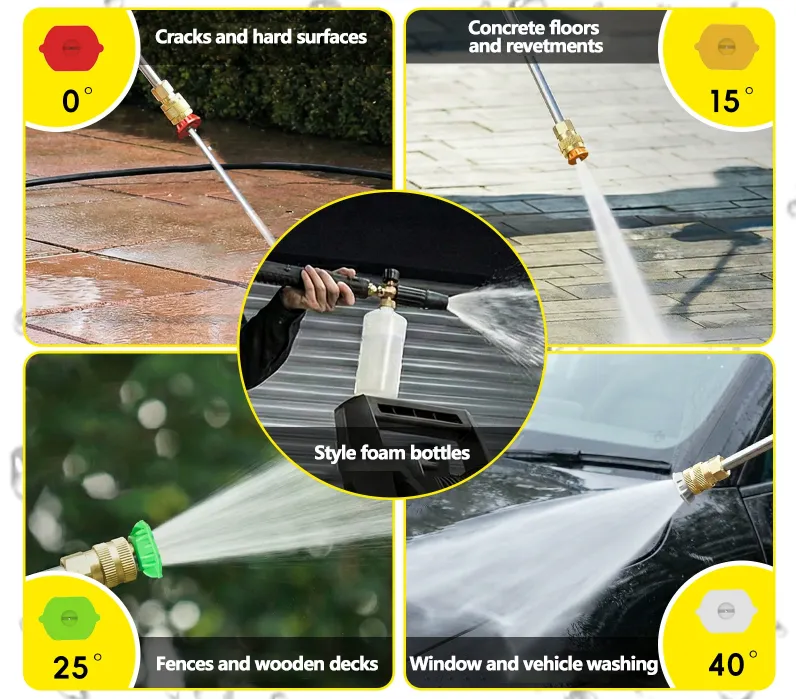
| Nozzle Color | Spray Angle | Applications | Suitable for: |
| Red (0°) | 0° | Targeted high-pressure impact cleaning | Stubborn stains that can cause damage and require extreme care |
| Yellow (15°) | 15° | Powerful cleaning | Durable surfaces such as concrete and driveways |
| Green (25°) | 25° | General cleaning | The first choice for most daily cleaning tasks |
| White (40°) | 40° | Gentle cleaning | Delicate surfaces such as cars, windows, and exterior walls |
| Foam Pot | 65° | Spraying cleaning agents | Pre-cleaning treatment for the gentlest cleaning |
Key recommendations: For everyday household cleaning, the green 25° nozzle is the most versatile choice; when washing cars or windows, always use the white 40° nozzle; the red 0° nozzle is extremely dangerous and beginners should avoid using it.
When using an electric pressure washer, it is recommended to follow these steps:
Step 1: Connect the Water Supply
Before starting the machine, ensure a stable water supply. Confirm that the water hoses are connected correctly, the inlet filter is clean, and the water flow is sufficient. A stable water supply can prevent pump damage.
Step 2: Select the Correct Nozzle
Different cleaning tasks require different spray patterns. For example, wide-angle sprays are suitable for large areas such as walls and patios; concentrated sprays are suitable for removing stubborn stains.
Step 3: Test the Pressure First
Before cleaning the entire area, test the water pressure in a concealed location. This can prevent surface damage, paint peeling, or material deformation.
Step 4: Maintain the Proper Distance
Do not hold the nozzle too close to the surface. Start at a distance of 2–3 feet (approximately 60–90 cm) from the surface and adjust as needed. High-pressure water jets at close range can damage paint, wood, and soft materials.
Step 5: Correct Spray Angle
Always spray at a downward angle; never spray upwards—this will force water into the interior of exterior walls, potentially causing moisture damage.
Step 6: Even Cleaning
When moving the spray gun, maintain a continuous flow and avoid rinsing the same area for an extended period. Use a smooth, sweeping motion, working in sections rather than spraying randomly.
Even high-performance pressure washers require proper operation.
Mistake 1: Using Too High Pressure: Higher pressure does not necessarily mean better cleaning. Excessive pressure can damage car paint, wood surfaces, and exterior wall coatings.
Mistake 2: Nozzle Too Close: A concentrated stream of high-pressure water can leave streaks or damage surfaces. Maintain a safe distance depending on the material type.
Mistake 3: Using the Wrong Spray Angle: An incorrect angle may push dirt deeper instead of removing it. The correct angle helps loosen and flush away dirt.
Mistake 4: Neglecting Cleaner: Water alone is often insufficient for thorough cleaning. Use a cleaner suitable for the surface, spray with a low-pressure soap nozzle, wait 5–10 minutes (but do not allow the cleaner to dry completely), then rinse.
Mistake 5: Neglecting Maintenance: Regular maintenance improves cleaning performance, machine reliability, and product lifespan.
Proper maintenance will keep your pressure washer in good working order for a long time.
Clean the inlet filter: Regularly remove dust and impurities from the filter. A clean filter increases water flow and protects the pump.
Drain residual water: After use, drain any residual water from the hose and pump body to prevent pump damage, internal corrosion, and freezing in winter.
Store properly: Store the machine in a dry, safe location, avoiding prolonged exposure to direct sunlight, extreme temperatures, and humid environments.
Regularly check accessories: Inspect the pressure hose, spray gun, and nozzles, and replace any damaged parts promptly.
How to Choose the Best Home Pressure Washer?
Different users have different cleaning needs:
Car cleaning: Recommended 1,200–1,900 PSI, focusing on adjustable pressure and gentle spray modes.
Garden and patio cleaning: Recommended 2,000–2,700 PSI, focusing on strong cleaning power and a longer hose.
Heavy outdoor cleaning (driveways, concrete, etc.): Recommended 2,500+ PSI, focusing on a powerful motor and stable pump performance.
For general household use: 1,500–2,500 PSI and 1,500–2,100W are recommended.
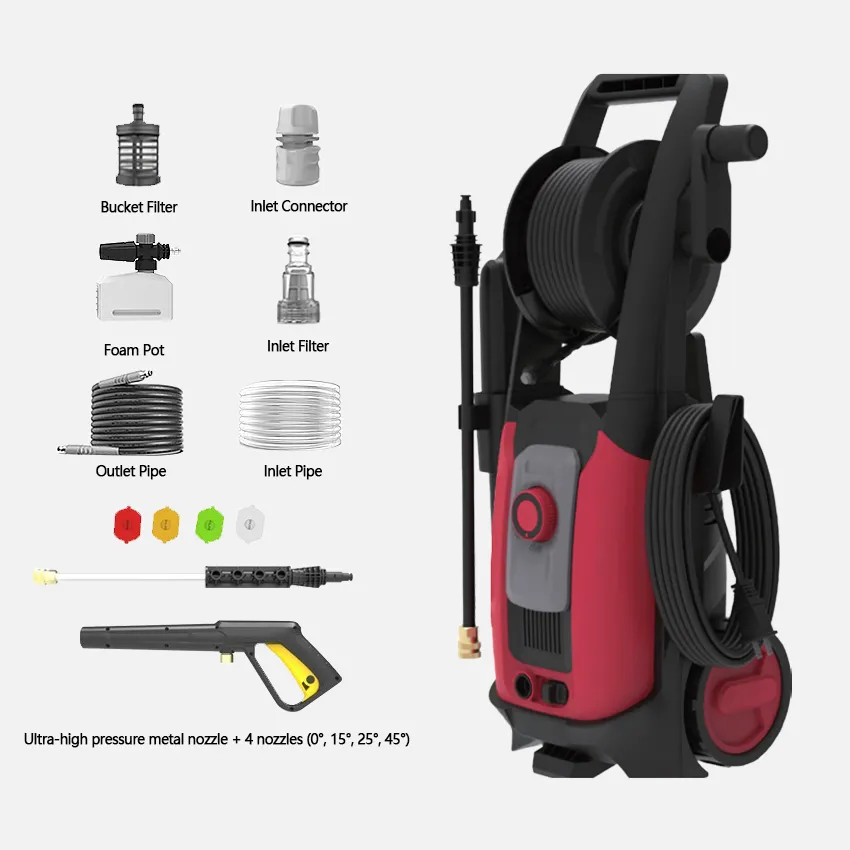
Among many home pressure washers, the Kormeson KMS-H03 is a star product that combines innovative design with excellent performance, making it especially suitable for families who value convenient storage and efficient cleaning.
Key Highlights
🔹 Patented Roll-Up Storage Structure: The most unique design of the KMS-H03 is its integrated independent rotary roll with a built-in rotating joint, preventing the hose from tangling or knotting when retracting or extending it. Say goodbye to the hassle of traditional high-pressure washer hoses scattered everywhere and difficult to store. After each use, simply pull the hose back neatly, saving storage space and extending hose life.
🔹 Pure Copper Motor, Stable and Durable: Equipped with a high-performance pure copper motor, it provides a continuous and stable high-pressure water flow that is resistant to degradation over long-term use. Compared to ordinary aluminum core motors, it offers better heat dissipation and a longer lifespan, ensuring the overall reliability of the machine.
🔹 Three Models in One Machine, Choose According to Needs: The KMS-H03 offers three models to cover different household cleaning needs.
| Model | Maximum pressure | Rated pressure | Motor power | Maximum flow rate | Applicable Scenarios |
| KMS-H03-A | 105 Bar | 70 Bar | 1150W | 6.7 L/min | Daily car wash, outdoor furniture, light yard cleaning |
| KMS-H03-B | 120 Bar | 80 Bar | 1250W | 6.7 L/min | Exterior wall cleaning, fence cleaning, patio cleaning |
| KMS-H03-C | 165 Bar | 115 Bar | 1750W | 7.0 L/min | Heavy cleaning of driveways, concrete, and stubborn stains |
All three models come equipped with a 5-meter high-pressure hose and a 5-meter power cord, providing a cleaning radius of up to 10 meters, sufficient for most household outdoor cleaning scenarios.
More Practical Features:
Dual Water Inlet Mode: Supports direct connection to a faucet or self-priming bottled water, adapting to different water source conditions.
Multiple Pressure Adjustments: Low pressure for watering plants and spraying cleaning agents, high pressure for stubborn stains.
Foaming Pot System: Quickly generates rich foam when used with cleaning agents, enhancing cleaning effectiveness.
Automatic Start/Stop Technology: Automatically starts when the trigger is pulled and stops after a delay when released, saving energy, reducing noise, and extending motor life.
Safety Lock + Leakage Protection: The water gun handle has a safety lock to prevent accidental spraying; built-in leakage protection function ensures safer use.
Four Quick-Connect Nozzles: 0°/15°/25°/40° four-color nozzles, easily switching between different cleaning modes.
If you frequently wash your car → We recommend the KMS-H03-A (105 Bar, gentle pressure that won’t damage your paint).
If you need to clean exterior walls, yards, or fences → We recommend the KMS-H03-B (120 Bar, most versatile).
If you need to clean stubborn stains on driveways, concrete, etc. → We recommend the KMS-H03-C (165 Bar, most powerful).
The KMS-H03 combines ease of use and easy storage, a pressure washer truly designed with the real pain points of home users in mind. With its innovative reel storage, reliable pure copper motor, and flexible model selection, it’s undoubtedly a top choice in the home pressure washer market.
💡 For more product details or to purchase, please visit: Home Pressure Washer List Page
Frequently Asked Questions about Home Pressure Washers
Q1: What is the best pressure washer for home use?
The best model depends on your cleaning needs. For most homes, a 1,500–2,500 PSI electric pressure washer strikes a good balance between cleaning power and ease of use.
Q2: Can a pressure washer wash a car?
Yes. For car washing, a pressure of 1,200–1,900 PSI is recommended. Be sure to use a 40° wide-angle white nozzle and keep the nozzle at least 12–18 inches (30–45 cm) away from the car body.
Q3: Is the power of my electric pressure washer sufficient?
Yes. Modern electric pressure washers use brushless motors and advanced pump designs, so they no longer feel underpowered. They are perfectly adequate for most home cleaning tasks.
Q4: How many PSIs are needed to clean a house?
Vinyl exterior walls: 1,200–2,000 PSI; Wood exterior walls: 1,200–1,500 PSI; Brick and concrete walls: 2,500–3,000 PSI.
Q5: Can a pressure washer remove mold?
Yes. With the right cleaning agent, it can help remove mold and moss.
Q6: Is a higher PSI always better?
No. The correct pressure depends on the object being cleaned. Excessive pressure can damage the surface.
Q7: Are pressure washers water-saving?
Yes. Because they clean faster and rely on pressure rather than water volume, they generally reduce overall water consumption.
Household pressure washers are among the most practical tools for modern home cleaning. Compared to traditional cleaning methods, electric pressure washers offer advantages such as faster cleaning speed, better cleaning results, less physical exertion, and simpler operation.
When choosing a household pressure washer, key considerations should include pressure (PSI), flow rate (GPM), motor quality, accessory configuration, and intended use. For most households, an electric pressure washer with 1,500–2,500 PSI is the optimal choice—meeting daily cleaning needs without damaging surfaces due to excessive pressure.
A reliable electric pressure washer can make your daily cleaning easier, more efficient, and time-saving.